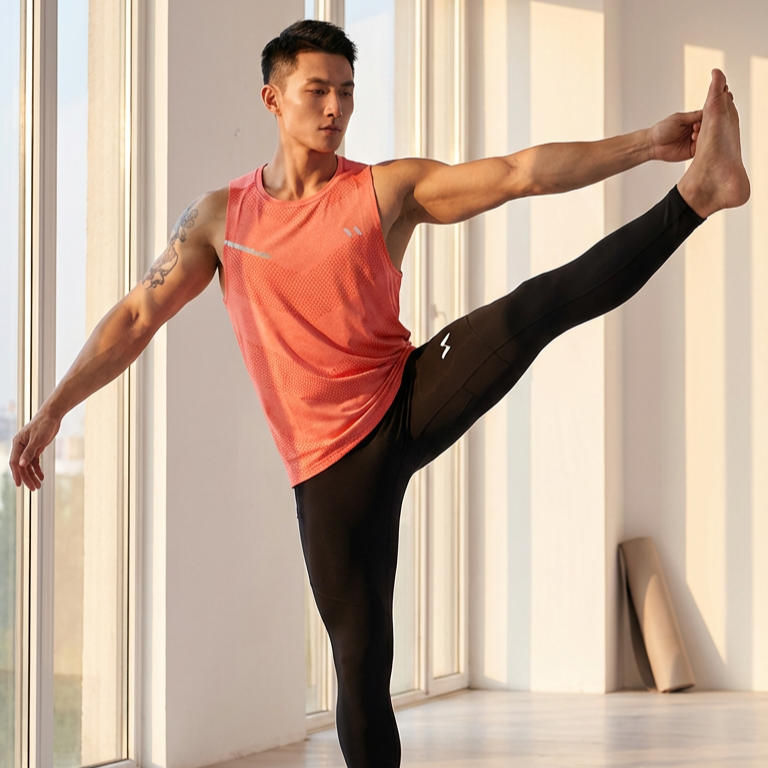
For many men, yoga enters the conversation as a form of recovery. It is described as something to do after training, a way to loosen tight muscles or offset heavy lifting. While it does provide those benefits, this framing understates what yoga actually develops.
Yoga is not a break from training. It is a form of training.
Traditional athletic programs emphasize output. Speed, weight, distance, and volume dominate the way progress is measured. These metrics are useful, but they leave large parts of physical capability underdeveloped. Joint stability, coordination under fatigue, and the ability to move deliberately through awkward ranges are rarely trained in isolation.
Yoga brings those neglected qualities into focus.
A well-structured practice asks the body to support itself through positions that are rarely encountered in conventional workouts. The emphasis is not on repetition, but on maintaining alignment and control under continuous load. The muscles that stabilize the hips, spine, and shoulders are forced to work in patterns that are difficult to replicate elsewhere.
This has implications far beyond flexibility. Athletes who practice yoga consistently often notice improvements in balance, efficiency of movement, and resilience to minor injuries. These changes do not arrive as dramatic breakthroughs. They accumulate gradually as the body learns to organize itself with less waste.
There is also a mental component that is easy to overlook. Training environments are typically loud and externally paced. Music dictates rhythm. Timers dictate effort. Yoga removes those cues. The practitioner must regulate intensity internally, staying attentive to breath and posture rather than reacting to external pressure.
That self-regulation carries into other forms of training. It becomes easier to recognize when effort is productive and when it is merely habitual.
When yoga is treated as cross-training rather than recovery, it reframes the entire practice. The mat becomes a place to refine movement patterns, rebuild joint capacity, and develop the discipline to stay present under load. These are qualities that no single lift or drill can teach in isolation.
For men who care about long-term performance rather than short-term numbers, yoga offers a form of training that fills the gaps most programs leave behind.