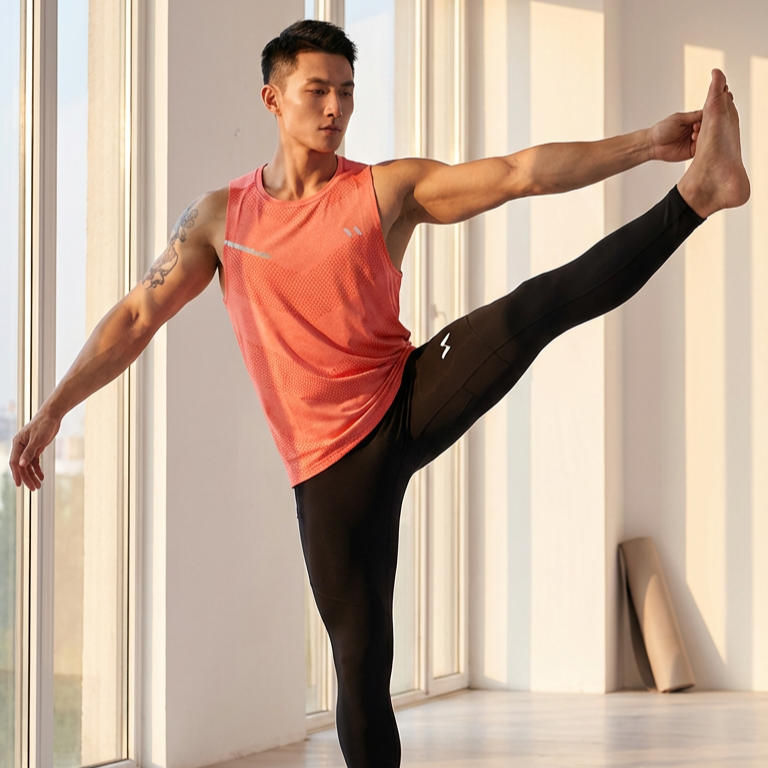
The story of men’s yoga leggings is not a sudden one. It is a narrative of a larger shift in the apparel industry: a shift away from intentional practice-driven design and toward broad, lifestyle-oriented offerings that serve the mass market more than the discipline.
In the early days of modern yoga’s rise, major brands treated yoga apparel with intention. Leggings, shorts, tanks, and tees were crafted to meet the functional requirements of the practice: breathability under heat, freedom of movement through depth, steady support rather than compression alone. These pieces were not trendy statements; they were tools for movement.
Over time, the commercial landscape changed.
When profit logic overtook practice logic
As yoga grew into a mainstream category, brands began chasing larger consumer segments. The economics of designing specific, practice-oriented products for smaller subgroups began to look less attractive compared with broad, multipurpose activewear. Apparel that could fit into daily life, gym routines, and casual wear promised higher volume and higher margins.
This shift had two consequences for men’s yoga leggings.
First, it deprioritized categories that looked “niche” or specialized — even if those categories served clear functional needs. Men’s yoga leggings, given their relatively smaller volume compared with women’s lines and other performance categories, became a prime candidate for discontinuation.
Second, as major brands expanded into ubiquitous athleisure — marketed as comfortable, versatile, and everyday — the distinction between yoga apparel and general athletic wear blurred. The design focus moved away from the specific demands of the mat and toward the broad demands of lifestyle imagery.
For men, this shift was especially impactful. Where once there were purpose-built options, men were left with repurposed gym tights, running gear, or shorts that looked acceptable but never fully supported the practice.
The market’s response
The market has responded to this pivot with increasing scrutiny. One of the brands most associated with premium yoga wear has faced public criticism for the very trajectory that led to this moment: moving toward general athleisure and away from focused innovation.
Industry conversations have reflected concern about predictability in design, declining differentiation in technical offerings, and a growing perception that Fortune-level apparel brands are prioritizing broad reach over category leadership. Analysts have noted slower growth in yoga-specific segments and strategic leadership changes as these brands grapple with their identities in an increasingly crowded market.
This reaction is not incidental. It reflects a wider realization that design without purpose — clothing that does not serve a specific activity’s core needs — eventually erodes trust. The very consumers who seek out brands for their performance credibility begin to question whether those brands still understand the disciplines they purported to support.
What this means for men who practice
For men who practice yoga seriously, this shift affects the experience of practice itself. The studio environment is not forgiving. Heat, sweat, depth, and stillness expose design shortcomings quickly. Fabric that looks fine on a treadmill may become transparent in a fold. Material that handles short bursts of motion may cling or restrict in sustained postures.
These failures are not dramatic. They are the silent interruptions of attention — a shifting waistband here, a cling there, a moment of self-consciousness just when focus matters most. Over time, those interruptions compound.
Why this context matters
Understanding how and why men’s yoga leggings disappeared from major brand portfolios is more than corporate history. It reveals an essential gap between general athletic design and discipline-focused design. It explains why many men today either tolerate less-than-ideal gear or avoid yoga-specific products altogether.
It also explains why a brand like Vyra is emerging now.
Vyra was created to answer a question that the market stopped asking: What does yoga apparel look like when you start with the demands of the practice and build outward? When you prioritize opacity, controlled stretch, heat management, and anatomical reality over universal aesthetics?
That approach requires restraint rather than spectacle, purpose rather than breadth, and a commitment to the practice itself rather than how it appears in public.
Men’s yoga leggings did not disappear because men stopped needing them. They disappeared because the industry stopped building them. Recognizing that distinction is the first step in rebuilding a category that supports disciplined practice, not broad convenience.