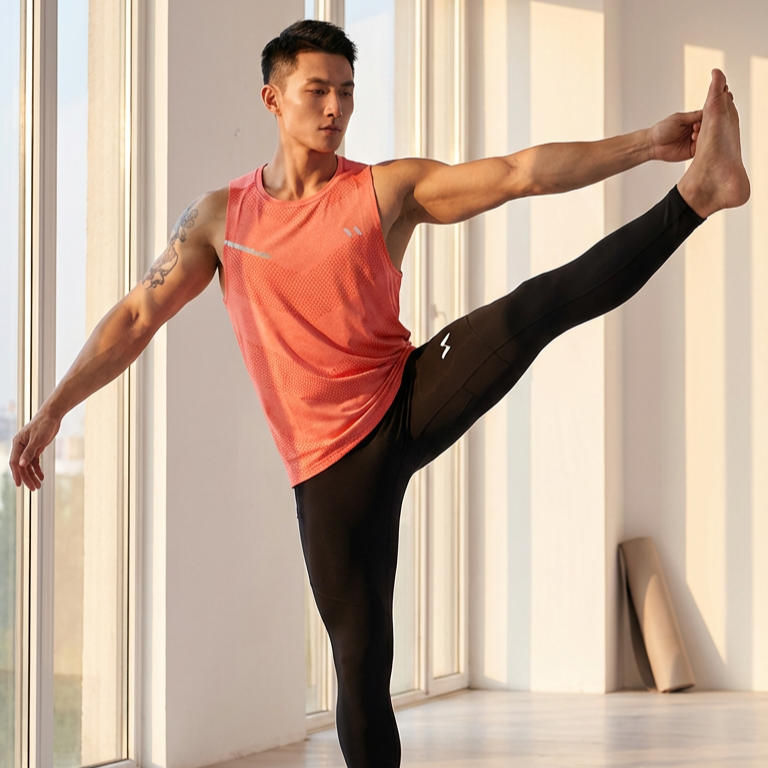
The word warrior often carries the wrong connotations. It is associated with aggression, domination, and spectacle. None of those qualities describe what actually sustains a yoga practice.
The warrior within is not defined by force. It is defined by steadiness.
In the studio, the warrior does not seek to overpower the posture. He remains present when sensation intensifies. He does not collapse when attention wavers, nor does he rush ahead of his breath. This form of discipline is quiet. It is almost invisible, which is why it is so easy to overlook.
The name Vyra, pronounced “vee-rah”, was chosen to reflect this idea.
It is derived from Virabhadrasana, the family of postures commonly known as Warrior I, II, and III. These poses are not about aggression. They are about structure. They require the practitioner to root, to align, and to sustain presence through discomfort without dramatizing it.
The word vira in Sanskrit translates loosely to hero or courageous one. Not in the sense of conquest, but in the sense of resolve. It describes the willingness to remain steady when movement becomes demanding and when the instinct to withdraw appears.
Vyra is a condensed expression of that principle.
The Warrior Within is not a persona. It is the part of practice that does not announce itself. It is the discipline to arrive when conditions are imperfect, to stay when effort peaks, and to leave without spectacle. It is the choice to meet difficulty without noise.
That is the lineage the name carries.