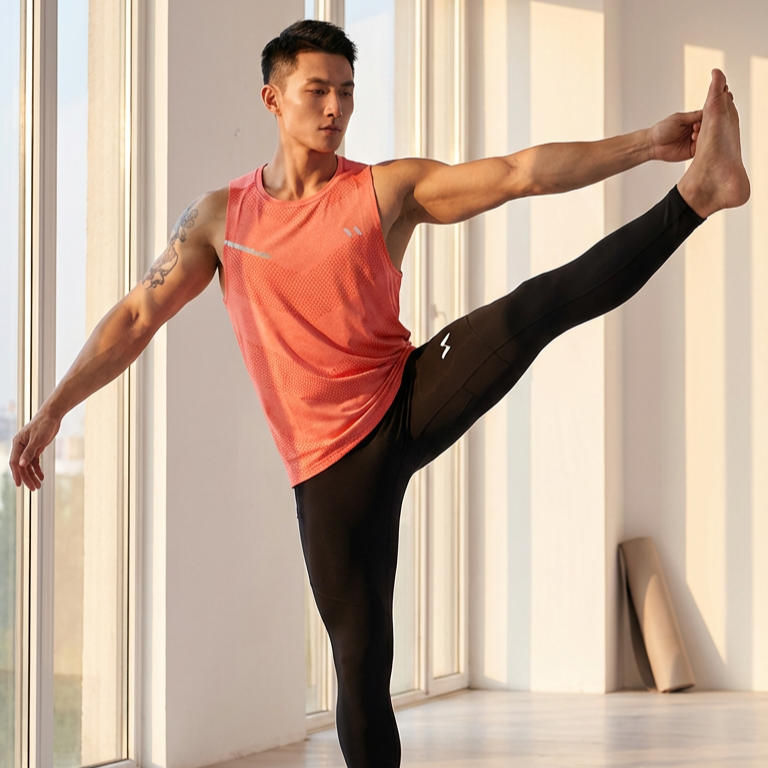
There is a common misunderstanding that mindfulness is passive. The word itself suggests quiet, retreat, and the absence of effort. For many men, this makes the idea of mindfulness feel incompatible with discipline or training. It sounds like something that happens when the real work is finished.
In practice, mindfulness is not the absence of effort. It is the ability to remain engaged without distraction.
Yoga exposes this difference quickly. In the early stages of practice, attention drifts easily. The body is working, but the mind searches for relief. Thoughts move toward the end of the class, the next posture, the discomfort in a particular joint. The breath becomes shallow without notice. The posture weakens not because the body is incapable, but because attention has moved elsewhere.
Mindfulness is the act of noticing this shift in real time.
What makes yoga uniquely effective is that it does not allow mindfulness to remain theoretical. The consequences of distraction are immediate. Balance wavers. Tension accumulates where it is not needed. The posture becomes effortful rather than steady. Each moment of inattention reveals itself physically.
This is where the idea of the Warrior Within begins to take shape. The warrior is not aggressive or dominant. It is the part of the practitioner that stays present when the posture becomes difficult and the urge to disengage appears. It is the discipline to observe without reacting and to continue breathing evenly even as sensation intensifies.
Over time, this quality transfers beyond the mat. Situations that previously triggered impatience or withdrawal become easier to navigate. Stress is still felt, but it no longer dictates behavior as immediately. The ability to notice internal reactions without being governed by them is not mystical. It is trained, repetition by repetition.
Mindfulness in yoga is therefore not an escape from effort. It is the sharpening of it. The practitioner is not seeking to remove challenge, but to meet it with clarity rather than reflex.
For men accustomed to measuring progress through speed, strength, or output, this can feel unfamiliar at first. There is no external metric for composure. There is only the internal recognition of when attention has drifted and the quiet choice to return to the breath.
That choice, repeated over time, becomes a form of strength that is difficult to observe from the outside but unmistakable from within.