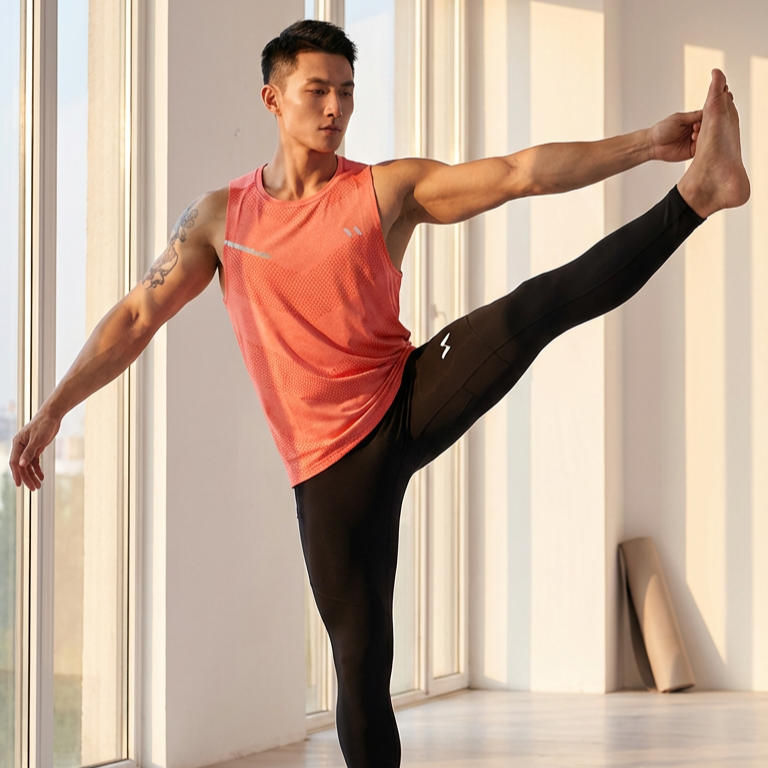
There was a time when yoga clothing was made almost exclusively for the studio. Fabric was chosen for breath rather than durability, construction for comfort rather than spectacle, and silhouettes for movement rather than trend. These garments rarely appeared outside the practice space because they were never meant to.
That boundary has quietly eroded.
Over the last decade, yoga apparel has migrated into everyday wardrobes. What began as functional studio wear is now rebranded as lifestyle clothing, designed to transition from class to errands to casual workspaces. This shift has expanded the market, but it has also changed what clothing is built to prioritize.
When apparel is designed to satisfy as many environments as possible, it stops excelling in any one of them.
Performance lifestyle wear tends to emphasize appearance and versatility over the specific demands of yoga. Fabrics are selected to look appealing under street lighting rather than to remain opaque under deep folds. Seams are placed for visual lines rather than to stay comfortable in stillness. Features that only matter on the mat are softened or removed because they complicate the look or reduce mass appeal.
For men, this compromise is particularly noticeable. Most men’s yoga apparel today is indistinguishable from general gym wear, with only superficial cues that it is intended for practice. The result is clothing that performs adequately in a wide range of activities while failing to truly support any of them.
The irony is that yoga itself has not changed. Classes are hotter, postures are deeper, and expectations around mobility and control continue to rise. The practice demands more from the body than it did a decade ago, yet the clothing designed for it has become increasingly generic.
This is not a condemnation of lifestyle apparel. It has its place. But it should not be mistaken for yoga apparel.
Designing for the studio requires a narrower lens. It means accepting that some features will never photograph well on a sidewalk. It means privileging breathability, structure, and comfort in stillness over universal appeal. It means resisting the temptation to flatten every product into a single category called activewear.
When clothing is built specifically for practice, it may not blend seamlessly into every environment. What it does instead is disappear when the work begins.